

If your business has a storage closet, warehouse corner, or server room full of outdated desktops, laptops, monitors, and peripherals, you are not alone. Most Connecticut organizations accumulate retired IT equipment for months or even years before addressing disposal. But those aging machines cannot sit indefinitely, and they certainly cannot go in the dumpster. This guide explains how to recycle old computers CT businesses rely on, walking you through every step from inventory to final disposition, so you can clear out old equipment responsibly, securely, and in full compliance with state and federal regulations.
Why Businesses Can't Just Throw Away Old Computers
Tossing old computers in the trash is not just irresponsible; in Connecticut, it may be illegal. The state has enacted electronic waste legislation that restricts the disposal of covered electronic devices in municipal waste streams. Computers, monitors, printers, and other electronics contain hazardous materials including lead, mercury, cadmium, and brominated flame retardants that contaminate soil and groundwater when they end up in landfills.
Beyond environmental regulations, there is the data security issue. Every computer that leaves your organization carries a potential data breach risk. Hard drives, even in machines that seem non-functional, often contain recoverable data including customer records, financial information, employee files, and proprietary business data. The EPA recommends working with certified recyclers who can ensure both environmental compliance and data security throughout the recycling process.
Step 1: Inventory Your Equipment
Before contacting a recycling partner, take stock of what you have. A thorough inventory helps your recycler provide accurate logistics planning and gives you a clear picture of potential value recovery. For each piece of equipment, record:
- Device type (desktop, laptop, server, monitor, printer, networking equipment)
- Manufacturer and model number
- Serial number and company asset tag
- Approximate age and general condition
- Whether the device contains a hard drive or other data storage
- Current location within your facility
You do not need a sophisticated asset management system for this. A simple spreadsheet works perfectly for most organizations. The key is having a complete count so nothing gets overlooked during the collection process.
Step 2: Back Up and Migrate Data
Before any equipment leaves your premises, ensure that all necessary data has been migrated to your current systems. Check for locally stored files, email archives, application-specific databases, browser bookmarks, saved credentials, and any other information that users may have stored on individual machines rather than network drives.
This step is often more involved than organizations expect. End users frequently save files to local desktops, download folders, and other locations outside of managed backup systems. Allow sufficient time for department heads to verify that all critical data has been accounted for before equipment is released for recycling.
Step 3: Ensure Proper Data Destruction
Data destruction is the single most important step in the computer recycling process. Every hard drive, solid-state drive, and other data-bearing component must be sanitized to a standard that prevents any possibility of data recovery. Professional electronic recycling providers offer both software-based data wiping and physical hard drive shredding, each appropriate for different situations.
Insist on receiving individual certificates of destruction that document the serial number, destruction method, date, and verification for every data-bearing device. This documentation protects your organization in the event of a compliance audit or data breach investigation. Simply deleting files or formatting drives is not sufficient; professional sanitization tools and processes are required.
Step 4: Choose a Certified Recycling Partner
Not all recyclers are equal. When evaluating potential partners to recycle old computers in CT, look for these qualifications:
- Industry certifications: R2 (Responsible Recycling) and e-Stewards certifications demonstrate adherence to recognized standards for data security, environmental management, and worker safety.
- Local operations: A recycler with a Connecticut facility reduces transportation costs, provides faster service, and is subject to state oversight.
- Documented chain of custody: From the moment equipment leaves your facility until final disposition, every asset should be tracked and documented.
- Data destruction capabilities: Your recycler should offer certified data destruction with individual certificates for every data-bearing device.
- Downstream accountability: Ask how materials are processed after initial breakdown. Reputable recyclers use vetted downstream partners and can document the final disposition of all materials.
- Insurance coverage: Adequate liability insurance protects your organization throughout the recycling process.
Step 5: Arrange Pickup and Transportation
Professional recyclers handle the logistics of collecting equipment from your facility. Depending on the volume, this may involve palletizing equipment, providing locked collection containers, or scheduling a truck for bulk pickup. Key considerations include:
- Equipment should be kept secure until the recycler takes possession
- Chain-of-custody documentation should begin at the point of pickup
- Loading dock access, elevator availability, and building security procedures should be coordinated in advance
- For multi-location organizations, pickups can often be consolidated to reduce costs
What Happens to Recycled Computers?
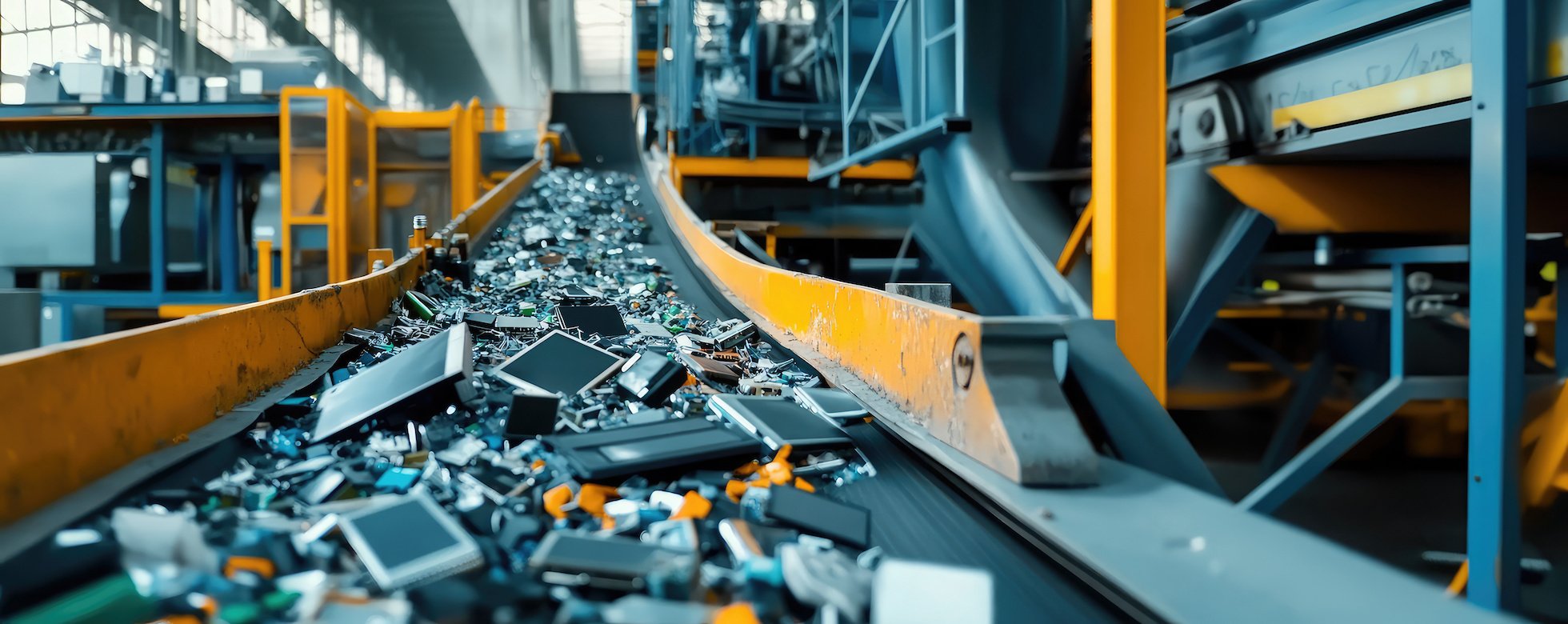
Once equipment arrives at a certified processing facility, it goes through a systematic breakdown process. Computers are disassembled and sorted into material categories. Metals, including steel, aluminum, copper, and precious metals from circuit boards, are sent to specialized smelters and refiners. Plastics are sorted by resin type and sent to plastics recyclers. Glass from monitors is processed separately due to potential lead content.
The materials recovery process is remarkably efficient. A typical desktop computer yields recoverable steel, aluminum, copper, gold, silver, palladium, and various plastics. These recovered commodities re-enter the manufacturing supply chain, reducing the need for virgin raw material extraction and the environmental impact associated with mining and refining.
Value Recovery: Get Paid for Your Old Equipment
Many businesses do not realize that their old computers and IT equipment may still have significant market value. Recent-generation laptops, desktops, servers, and networking equipment can often be refurbished and resold in secondary markets. Even older equipment has commodity value in the metals and materials it contains.
High Tide Management's IT asset disposition program evaluates every piece of equipment for its remarketing potential. Equipment with remaining useful life is data-wiped, tested, refurbished if necessary, and resold through established channels. The revenue generated is shared with our clients, often offsetting or exceeding the cost of the recycling service itself. Many Connecticut businesses are surprised by how much value their retired equipment still holds.
Why CT Businesses Choose High Tide for Computer Recycling
For more than 25 years, High Tide Management has been the trusted recycling partner for businesses throughout Connecticut. Operating from our Branford facility, we provide comprehensive computer recycling services that address every aspect of responsible IT equipment disposal:
- Complete data security: NIST 800-88 compliant data destruction with individual certificates for every device
- Environmental compliance: Full adherence to Connecticut e-waste regulations and federal environmental standards
- Value recovery: Professional remarketing services that generate revenue from your retired equipment
- Flexible logistics: On-site pickup throughout Connecticut with secure transportation and documented chain of custody
- Transparent reporting: Detailed disposition reports showing every asset processed, the method used, and any value recovered
- Local expertise: A quarter century of experience serving Connecticut businesses across healthcare, finance, education, government, and manufacturing
Ready to Recycle Your Old Office Computers?
Do not let outdated IT equipment create security risks and compliance liabilities for your organization. Whether you have a dozen old desktops or an entire data center to decommission, High Tide Management has the experience, certifications, and infrastructure to handle the job efficiently and responsibly.
Contact High Tide Management today or call (203) 457-3575 to schedule a pickup or request a free assessment of your retired IT equipment. We will help you clear out old technology, protect your data, stay compliant, and recover value in the process.